
Communities Come Together to Enhance the Halmillawewa Tank Ecosystem
In celebration of World Environment Day 2026, the Lanka Rainwater Harvesting Forum
(LRWHF) organized a community tree-planting program on 9 June 2026 at the Halmillawewa
Tank upper catchment area in Thimbiriyawa Village. The initiative brought together local
institutions and residents in a shared effort to strengthen environmental conservation and support
the long-term sustainability of local water resources.
The program was conducted in collaboration with the Thimbiriyawa Rainwater Harvesting
Society, officers of the Agrarian Service Department attached to the Ehetuwewa Agrarian
Service Center, and the Halmillawewa Tank Farmer Organization. Representatives from the
Grama Niladhari Office, Divisional Secretariat, Samurdhi Development Program, and local
community members also participated in the event, reflecting a strong commitment to collective
environmental action.
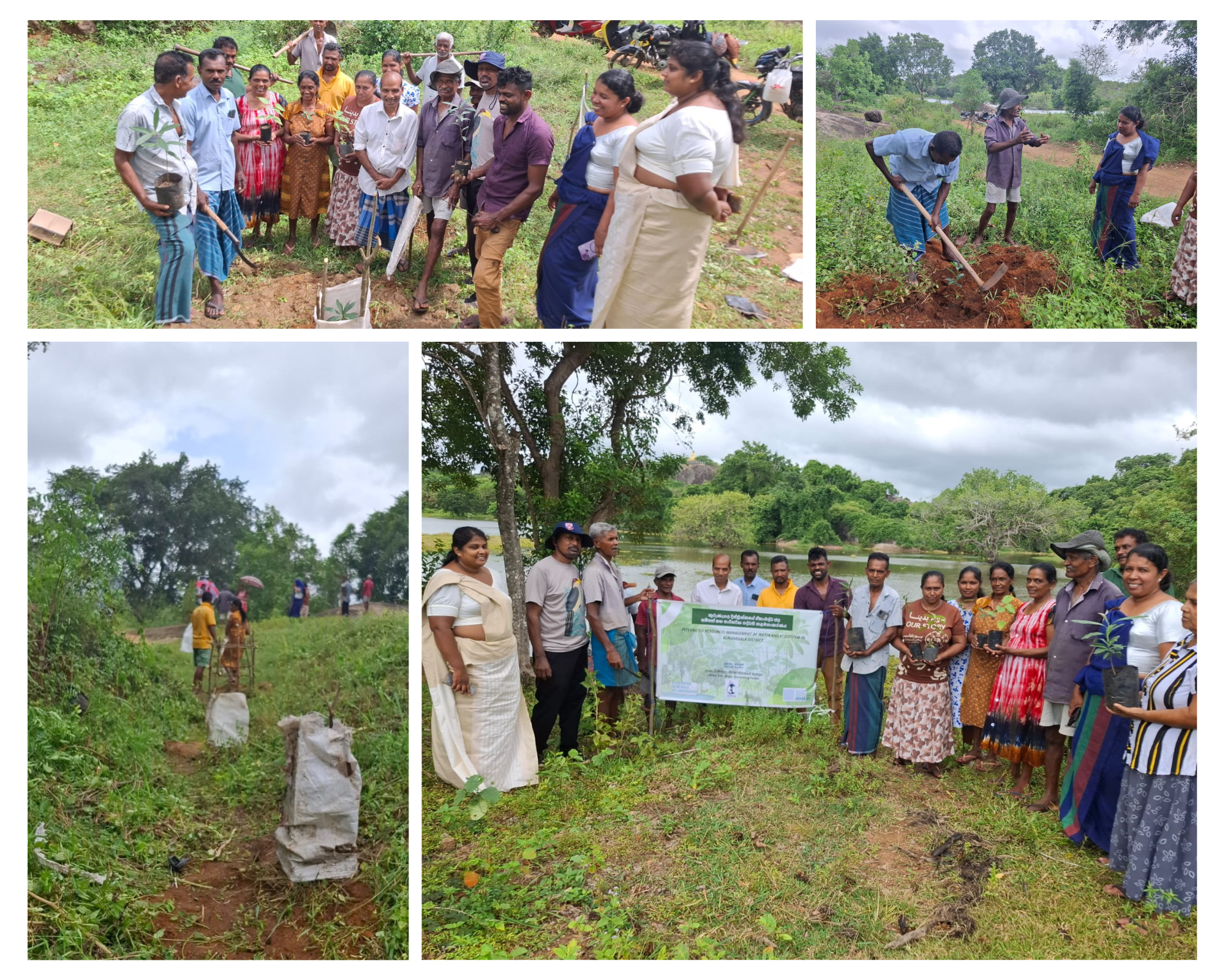
A total of 24 indigenous trees were planted across Thimbiriyawa, Halmillawewa, Ovita, and
Deniya, including Mee, Kumbuk, Karanda, Nabada, Helamba, and Kathurumurunga species. The
planting materials were supplied by the Nethuli Plant Nursery in Thimbiriyawa, a
community-based initiative supported through LRWHF development programs.
The activity focused on improving the environmental condition of the Halmillawewa Tank
ecosystem and its upper catchment area. Increasing tree cover around the tank will help reduce
soil erosion, support groundwater recharge, enhance biodiversity, and protect water resources
vital to local livelihoods.
The program’s success was made possible by the active participation of 25 individuals from
government institutions, community organizations, and local residents. Farmers from the village
played an important role in preparing planting sites and will continue to support the watering,
maintenance, and protection of the newly planted trees.
Participants expressed satisfaction with the program’s outcome and emphasized the importance
of continuing similar initiatives in the future. The event served as a reminder that community-led
environmental action can make a meaningful contribution to building healthier ecosystems and
more resilient communities.
Through partnerships and local engagement, initiatives such as this demonstrate how
environmental conservation and water resource protection can go hand in hand, creating lasting
benefits for both people and nature.